The Galloping Legends of Rajasthan: Kacchi Ghodi Dance & The Algoza Symphony
Imagine a warrior on a horse, sword in hand, defending his honor. Now, reimagine this scene with vibrant colors, rhythmic drum beats, and a dancer who wears the horse. This is the magic of Kacchi Ghodi. In this episode, we travel through the stories of Raju Bharti and his troupe from Bundi, Rajasthan, who bring the desert's history to the streets of Chandigarh.
🐎 The Legend of Veer Teja Ji: A Promise Kept
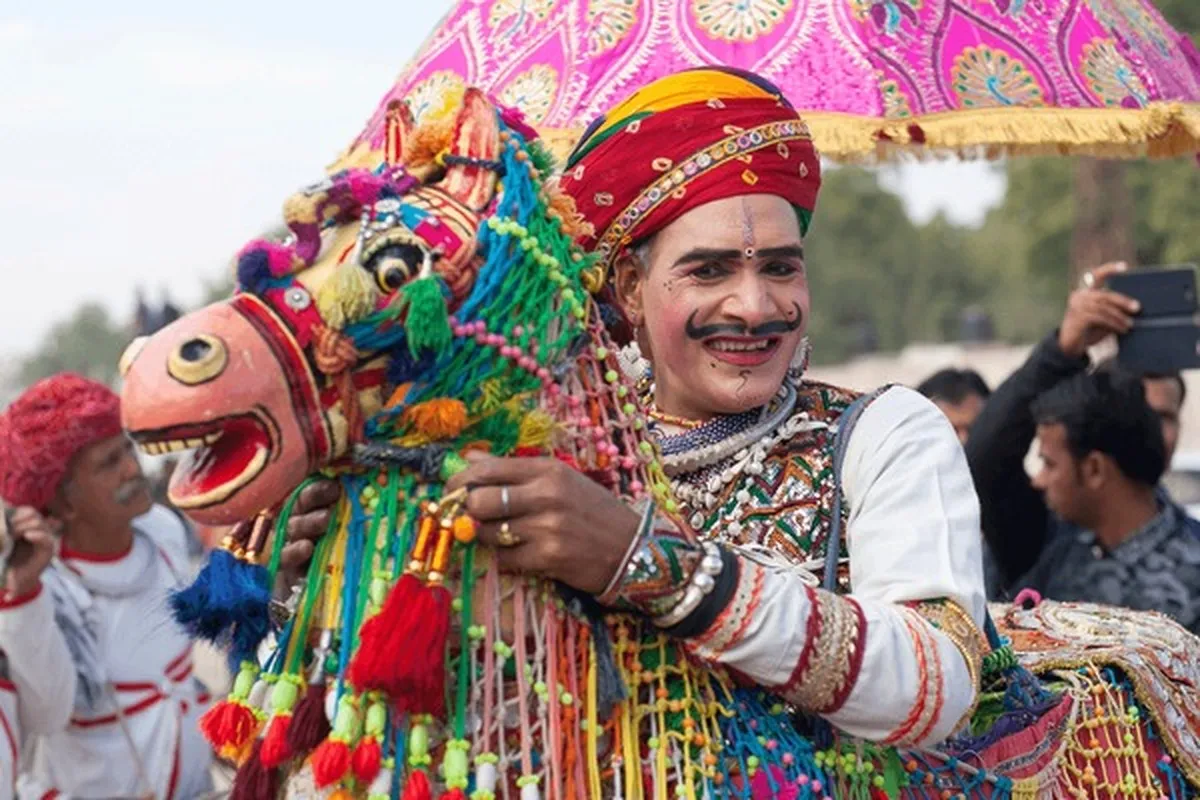
Dancers wearing the bamboo-frame 'Kacchi Ghodi' representing Teja Ji's mare.
The dance is not merely entertainment; it is a retelling of history. Group leader Shankar Lal Nagar explains that their art is dedicated to Veer Teja Ji Maharaj, a folk deity born in Kharnal, Nagaur. Teja Ji is revered not just for his bravery in battle, but for his supreme integrity.
The legend goes that Teja Ji encountered a snake while on his way to save a herd of cows. The snake intended to bite him. Teja Ji pleaded with the snake to let him save the cows first, promising to return. True to his word (Vachan), after saving the cows—and being wounded in battle—he returned to the snake.
Key Insight: The Value of 'Vachan'
The Kacchi Ghodi dance symbolizes the bond between the warrior and his trusty mare, Leelan (Lilghar). The performance originated from elders singing these ballads of sacrifice and honor on village platforms (Chabutra), eventually evolving into a visual spectacle to keep the history alive for younger generations.
⚔️ The Art of Mock Combat
"Kacchi" means raw or bamboo, and "Ghodi" means mare. The dancers wear a costume made of bamboo frames, papier-mâché, and mirror work that looks like a horse.
The dancers often perform in pairs, wielding swords and moving back and forth to the beat of the Dhol. This choreography mimics a mock fight or a cavalry charge. It was historically performed to entertain bridegroom parties (Baaraat) and to showcase the martial history of the region.
🎺 The Breath of the Desert: The Algoza
While the visual of the horse captures the eye, the sound of the Algoza captures the soul. Played by master musician Ram Kalyan Ji, the Algoza is a double-flute instrument.
Key Insight: Circular Breathing
Playing the Algoza is incredibly difficult. It requires a technique called Circular Breathing. The musician must blow air into the flutes continuously to maintain a drone sound while simultaneously inhaling through the nose to keep the melody alive. There are no pauses for breath—the music flows like a river.
Alongside the Algoza, the group uses the Chari (a percussion pot), the Dhol (drum), and the Thali (metal plate) to create a high-energy rhythm that keeps the dancers moving for hours.
🌍 30 Years on the Road
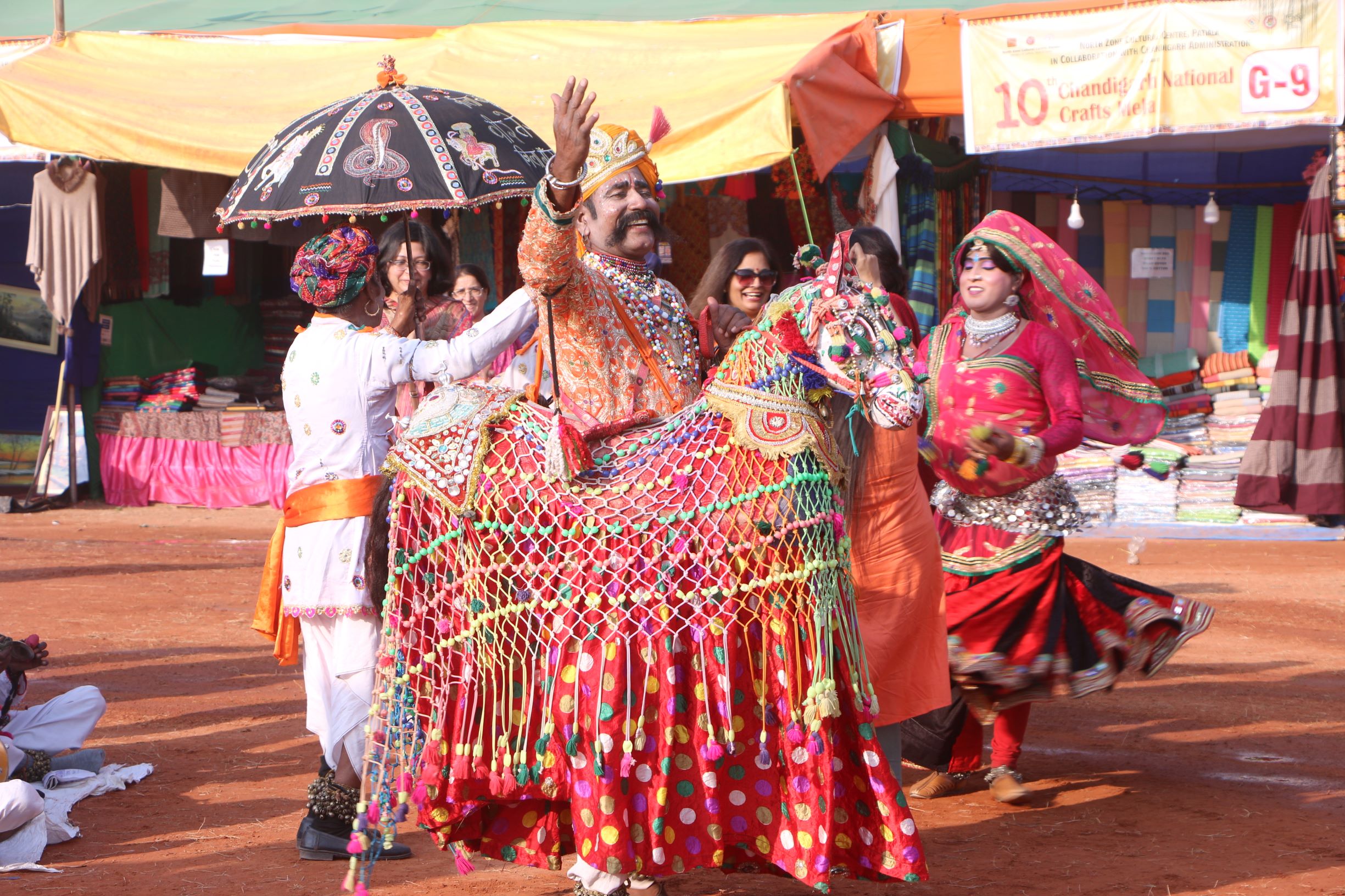
The troupe from Bundi has traveled from Maharashtra to Himachal to perform.
Raju Bharti shares that he has been part of this tradition since 1990. For over three decades, the group has lived a nomadic life, traveling from Bundi to Mumbai, Nagpur, Amritsar, and Chandigarh.
Is it tiring? Yes. The costumes are heavy, and the travel is long. But Raju Ji smiles when asked about the fatigue.
🎭 Bring Culture to Your Event
Are you looking to book authentic Folk Artists like Raju Bharti's group for a wedding or cultural event?
Contact Us for Booking❓ Frequently Asked Questions
Veer Teja Ji was a legendary Rajasthani warrior worshipped as a folk deity. He is celebrated for his supreme sacrifice—keeping his promise to a snake to allow it to bite him after he had successfully rescued a herd of cows.
The Algoza is a woodwind instrument made of two joined beak flutes. One flute plays a continuous drone while the other plays the melody. It requires the difficult technique of circular breathing to play without pausing.
It is traditionally performed in the Shekhawati region of Rajasthan (like Bundi and Nagaur) during weddings, social gatherings, and festivals. It creates an atmosphere of celebration and valor.